Visual Introduction

The Architecture of Thought
A master taxonomy of human reasoning, manipulation, and error — presented as a visual journey through the landscape of how we think, argue, and deceive.
🧪 This platform is in early beta. Features may change and you might encounter bugs. We appreciate your patience!
A master taxonomy of human reasoning, manipulation, and error — presented as a visual journey through the landscape of how we think, argue, and deceive.
Every day, we process thousands of arguments — in news articles, social media posts, conversations, advertisements, and political speeches. But how many of these arguments are logically sound? How many are designed to manipulate?
Most people lack the vocabulary and framework to identify when reasoning goes wrong. The TellDear taxonomy changes that by providing a comprehensive map of reasoning patterns — both valid and flawed.

Our minds prefer fast, intuitive heuristics (System 1) over slow, deliberate logic (System 2). This is the core insight from Daniel Kahneman's research on dual-process theory.
This gap between intuition and analysis is where manipulation thrives. Propaganda, advertising, and demagogy all exploit the fact that our brains take cognitive shortcuts — and these shortcuts can be systematically abused.
The taxonomy organizes reasoning flaws into four major categories that form the foundation of the six-dimensional model.
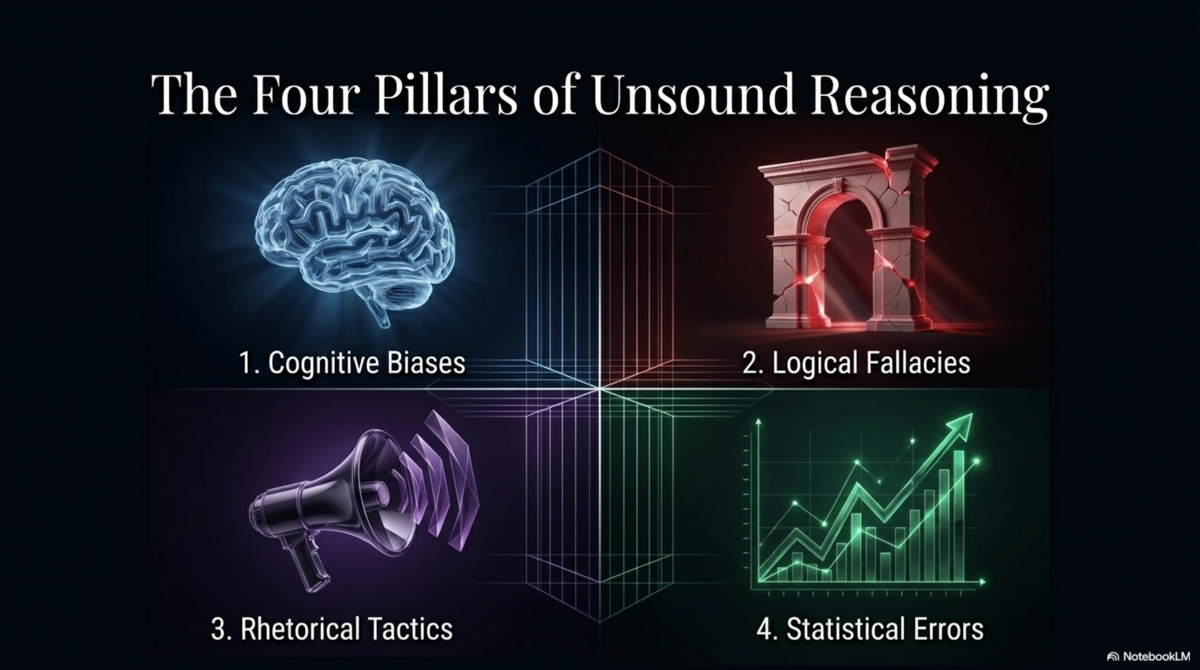
Systematic mental shortcuts that distort perception and judgment
Structural errors where conclusions don't follow from premises
Deliberate persuasion techniques that bypass rational evaluation
Misuse and misinterpretation of data and empirical evidence
Cognitive biases are the brain's survival shortcuts that inadvertently distort reality. They evolved to help us make quick decisions in dangerous environments, but in the modern information landscape, they become liabilities.
Unlike logical fallacies (which are errors in argument structure), biases operate at the perceptual level — we don't even realize they're influencing us.
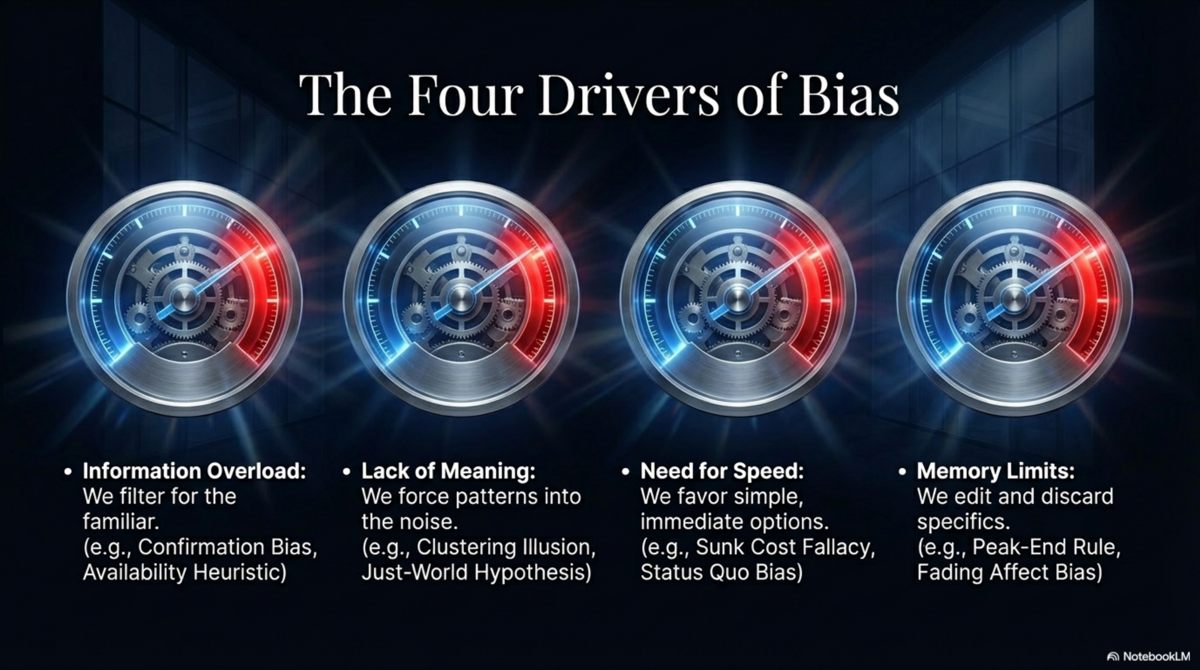
We filter for the familiar — Confirmation Bias, Availability Heuristic.
We force-fit patterns into noise — Clustering Illusion, Just-World Hypothesis.
We favor simple, immediate options — Sunk Cost Fallacy, Status Quo Bias.
We edit and discard specifics — Peak-End Rule, Fading Affect Bias.

Logical fallacies represent the mathematical and structural failure of an argument. When the logical structure is broken, no amount of evidence can make the conclusion valid.
The TellDear taxonomy captures these fallacies as First-Order Logic (FOL) patterns that can be formally verified using SMT solvers — turning fallacy detection from subjective judgment into mathematical proof.
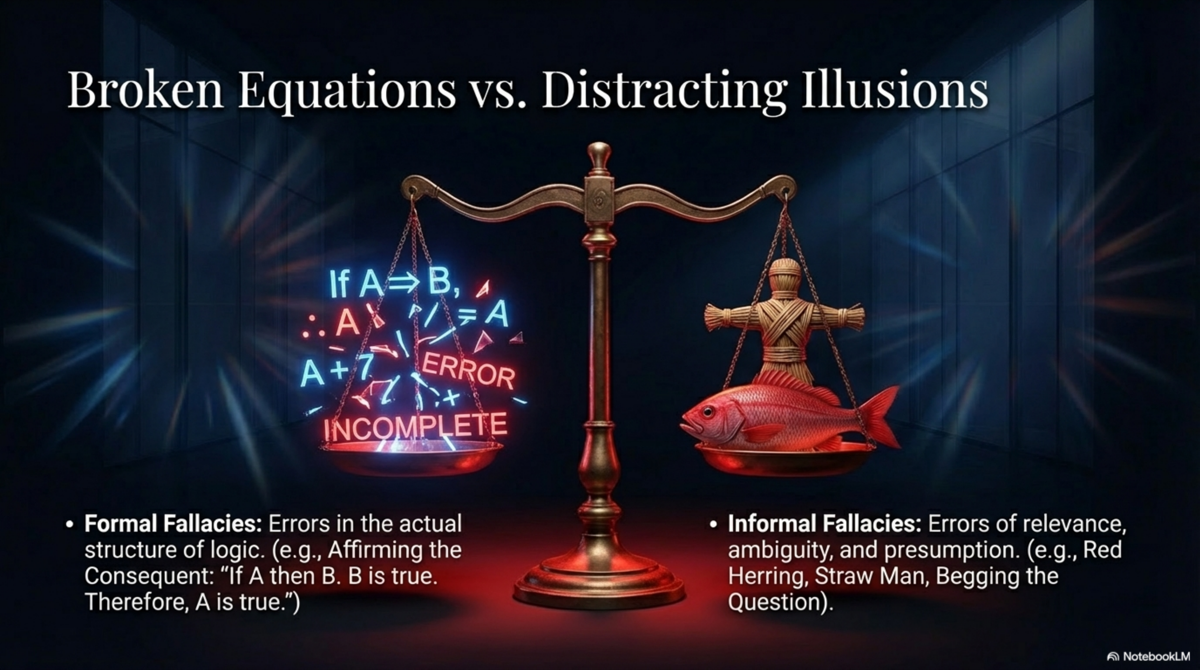
Errors in the actual structure of logic.
e.g. Affirming the Consequent: "If A then B. B is true. Therefore, A is true." — The structure itself is invalid regardless of content.
Errors of relevance, ambiguity, and presumption.
e.g. Red Herring, Straw Man, Begging the Question — The structure may look valid, but the content introduces deception.
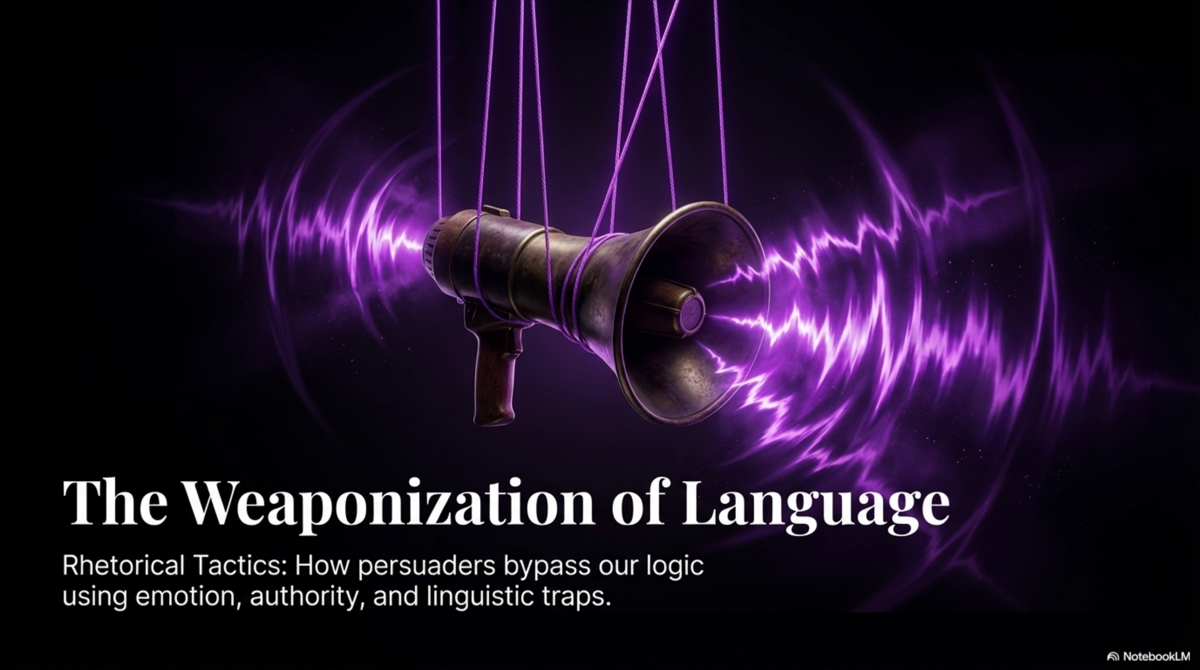
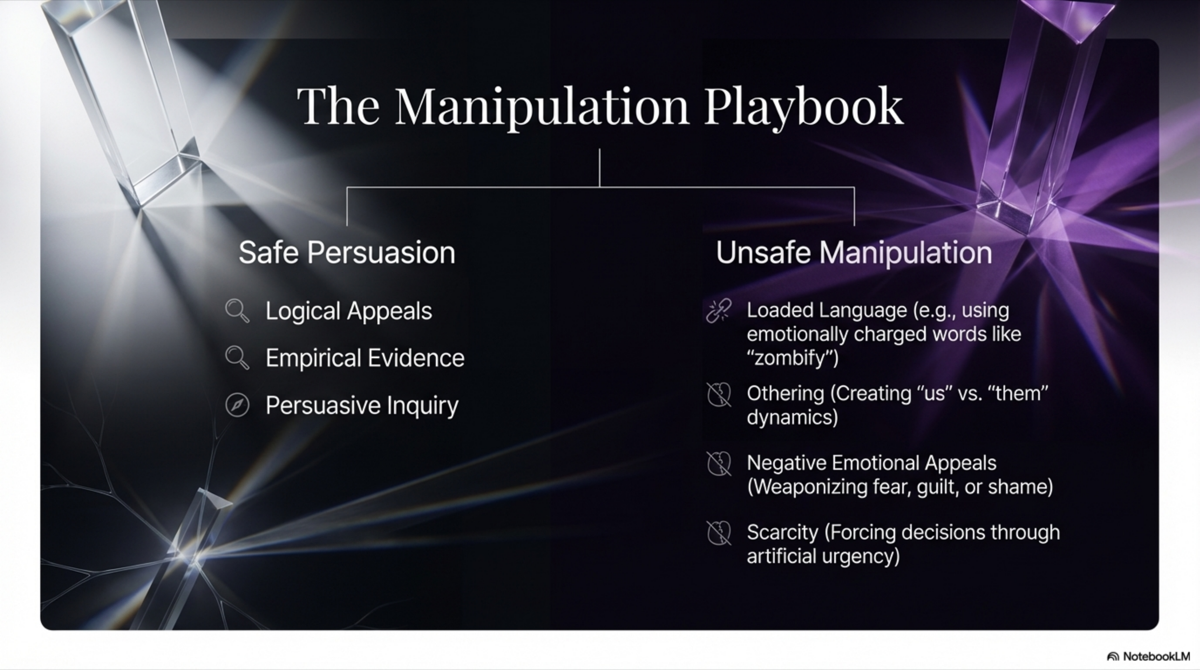
Rhetorical tactics are how persuaders bypass our logic using emotion, authority, and linguistic traps. These techniques are as old as human civilization — and more powerful than ever in the age of social media.
The line between legitimate persuasion and manipulation is thin. Understanding the taxonomy helps you recognize when that line is being crossed.
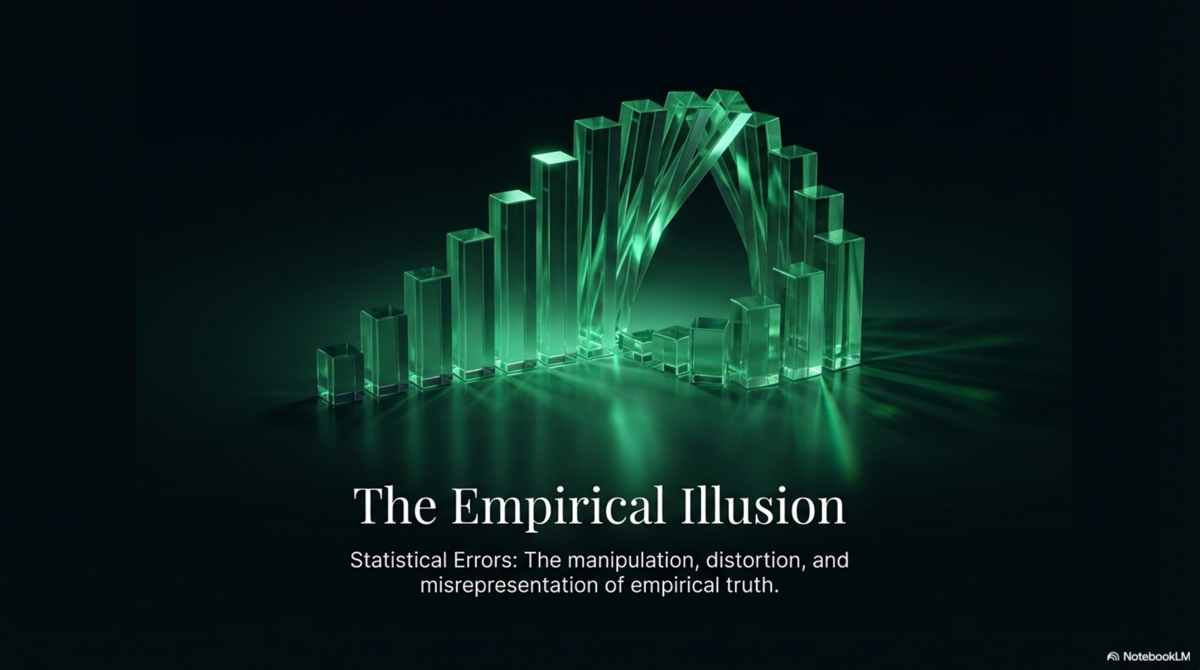
Statistical errors represent the manipulation, distortion, and misrepresentation of empirical truth. In an age where "data-driven" is synonymous with "trustworthy," these errors are among the most dangerous.
Numbers can lie just as effectively as words — and they carry an aura of objectivity that makes their deceptions harder to detect.
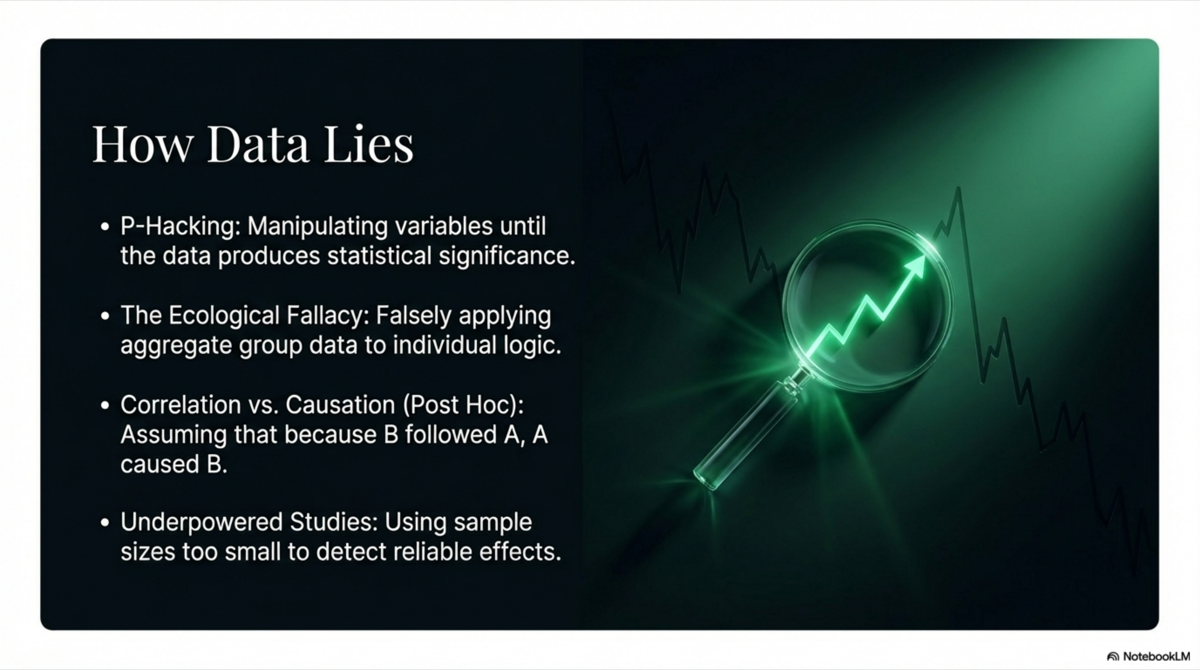
Manipulating variables until the data produces statistical significance.
Falsely applying aggregate group data to individual logic.
Assuming that because B followed A, A caused B (Post Hoc).
Using sample sizes too small to detect reliable effects.
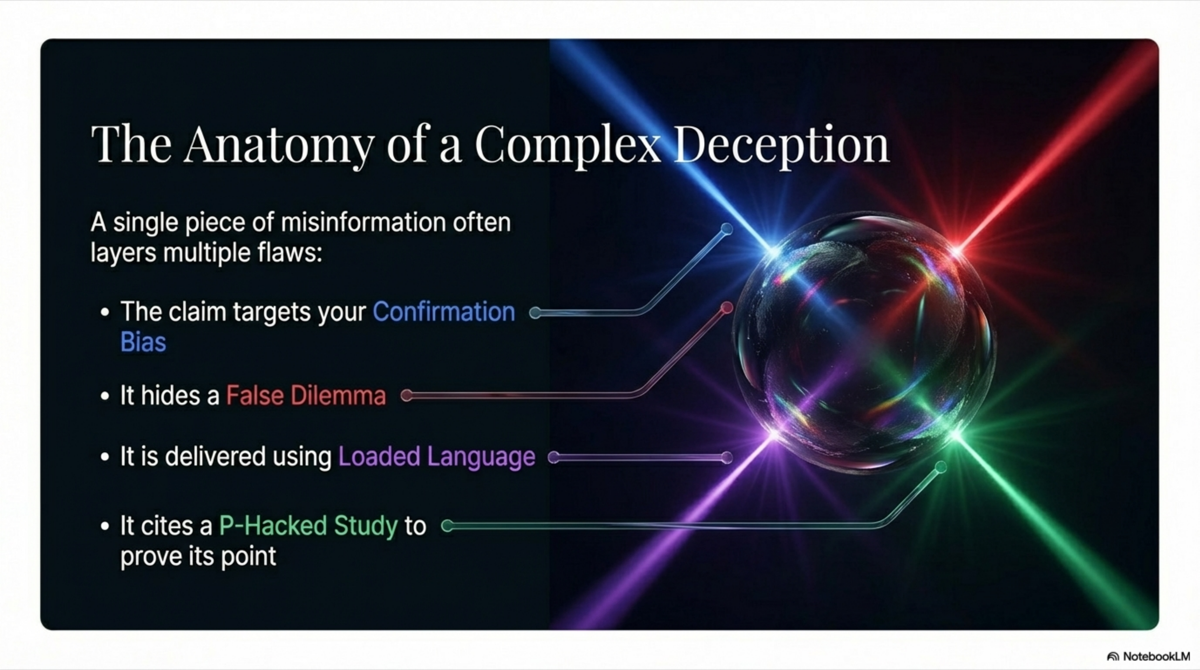
A single piece of misinformation often layers multiple flaws simultaneously. This is what makes real-world deception so effective — and why a comprehensive taxonomy is essential.
A single deceptive claim might:

The taxonomy is your cognitive shield. When you can name a reasoning flaw, you can resist it. Awareness is the ultimate defense mechanism against a post-truth world.
This is the core philosophy behind TellDear: by making reasoning patterns visible, searchable, and analyzable, we empower individuals to think more critically about the information they encounter every day.
Dive deep into the 535+ facets of human reasoning, manipulation, and error. Explore the full interactive taxonomy.